

How to Collect Stained or Dried Samples for Infidelity DNA Testing
Collecting Stained or Dried Samples for Infidelity DNA Testing
Stained or dried biological material can sometimes provide valuable evidence for infidelity DNA testing. Whether you've discovered a suspicious stain on clothing, bedding, or another surface, proper collection and storage can help preserve the material for laboratory analysis.
At DNA Test Answers, we accept a variety of dried and stained samples for semen detection, saliva detection, and DNA profile analysis.
This guide explains how to collect, preserve, and submit dried stains while minimizing contamination and damage.
What Types of Dried Stains Can Be Tested?
Biological material may remain detectable after it has dried, even when a stain is no longer clearly visible.
Commonly submitted items include:
Underwear and intimate clothing: Suspected semen or other biological stains.
Bedsheets and pillowcases: Areas with visible or suspected bodily fluids.
Towels and washcloths: Dried stains or areas of suspected contact.
Shirts and other clothing: Specific stained areas requiring examination.
Used tissues: Dried biological material that may contain recoverable DNA.
Other fabrics: Items with suspected semen, saliva, or bloodstains.
The presence of a visible stain does not guarantee that biological material or usable DNA will be recovered.
How to Collect and Preserve Dried Stains
1. Avoid Touching the Stain
Use clean disposable gloves when handling stained items. Avoid touching the suspected biological material directly, as this may introduce additional DNA.
If collecting multiple items, change gloves between samples.
2. Do Not Wash or Clean the Item
Do not wash, rinse, scrape, or attempt to remove the stain.
Cleaning can reduce or destroy biological material needed for testing. Submit the item in its existing condition whenever possible.
3. Make Sure the Item Is Completely Dry
If the item is damp, allow it to air-dry naturally in a clean, protected environment.
Avoid direct sunlight, hair dryers, heaters, or other heat sources.
Moisture can encourage bacterial growth and accelerate DNA degradation.
4. Identify the Stained Area
If the item contains a specific stain, identify its location for the laboratory.
You may photograph the item or mark the surrounding area without touching the stain itself.
For clothing and smaller fabrics, we generally recommend submitting the entire item.
If the stain is on a large item, such as a bedsheet or mattress cover, contact DNA Test Answers before cutting out a section.
5. Package and Store Properly
Place each completely dry item in its own clean paper envelope or paper bag.
Avoid sealing damp samples in plastic, which can trap moisture.
Label the package with your order number, item description, and the area you want tested.
Store the sample in a cool, dry location until shipping.
Can Old or Dried Stains Still Be Tested?
Yes. Biological material may remain detectable for months or even years under favorable conditions.
However, successful testing depends on several factors, including:
The amount of biological material originally deposited
Exposure to moisture, heat, or sunlight
Whether the item has been washed or cleaned
Storage conditions and bacterial activity
Older stains may still provide useful results, but the age of a stain alone cannot determine whether testing will be successful.
What If the Stain Is on a Surface That Cannot Be Shipped?
Some suspected stains are found on mattresses, furniture, or other surfaces that cannot easily be submitted to a laboratory.
In these situations, collecting the material with a sterile swab may be appropriate.
However, the correct collection method depends on the surface and the type of biological material suspected.
Contact DNA Test Answers before attempting to swab or remove a stain from a fixed surface. Improper collection can reduce the amount of recoverable material or introduce contamination.
How to Ship Dried or Stained Samples
Once your samples are completely dry and individually packaged:
Place the labeled paper envelopes into a sturdy outer shipping envelope or box.
Include your order number and any relevant collection instructions.
Seal the package securely.
Use a shipping service that provides tracking.
Avoid excessive heat or moisture during storage and shipment.
For general sample collection instructions, see our guide, How to Collect DNA Samples for Infidelity Testing.
Frequently Asked Questions
Can semen still be detected after it has dried?
Yes. Semen-associated material may remain detectable after drying. However, successful detection depends on the sample's condition, storage history, and the amount of material present.
Should I cut a dried stain out of clothing?
We generally recommend submitting the entire garment when practical. If the item is too large to ship, contact us before cutting the fabric.
Can I submit a stain that is several months old?
Yes. Older stains may still be suitable for testing, particularly when stored in dry, protected conditions. Successful detection or DNA recovery cannot be guaranteed.
Can I scrape a dried stain off a surface?
We do not recommend scraping or removing biological material without appropriate collection instructions. Contact us to discuss the surface and the best collection method.
Need Help Collecting a Dried Sample?
DNA Test Answers offers specialized testing for dried biological stains, including semen detection and DNA profile extraction and comparison.
If you're unsure whether a stain is suitable for testing or how to collect it, contact DNA Test Answers before submitting your sample.
We can help you determine the appropriate collection method and prepare your item for laboratory analysis.

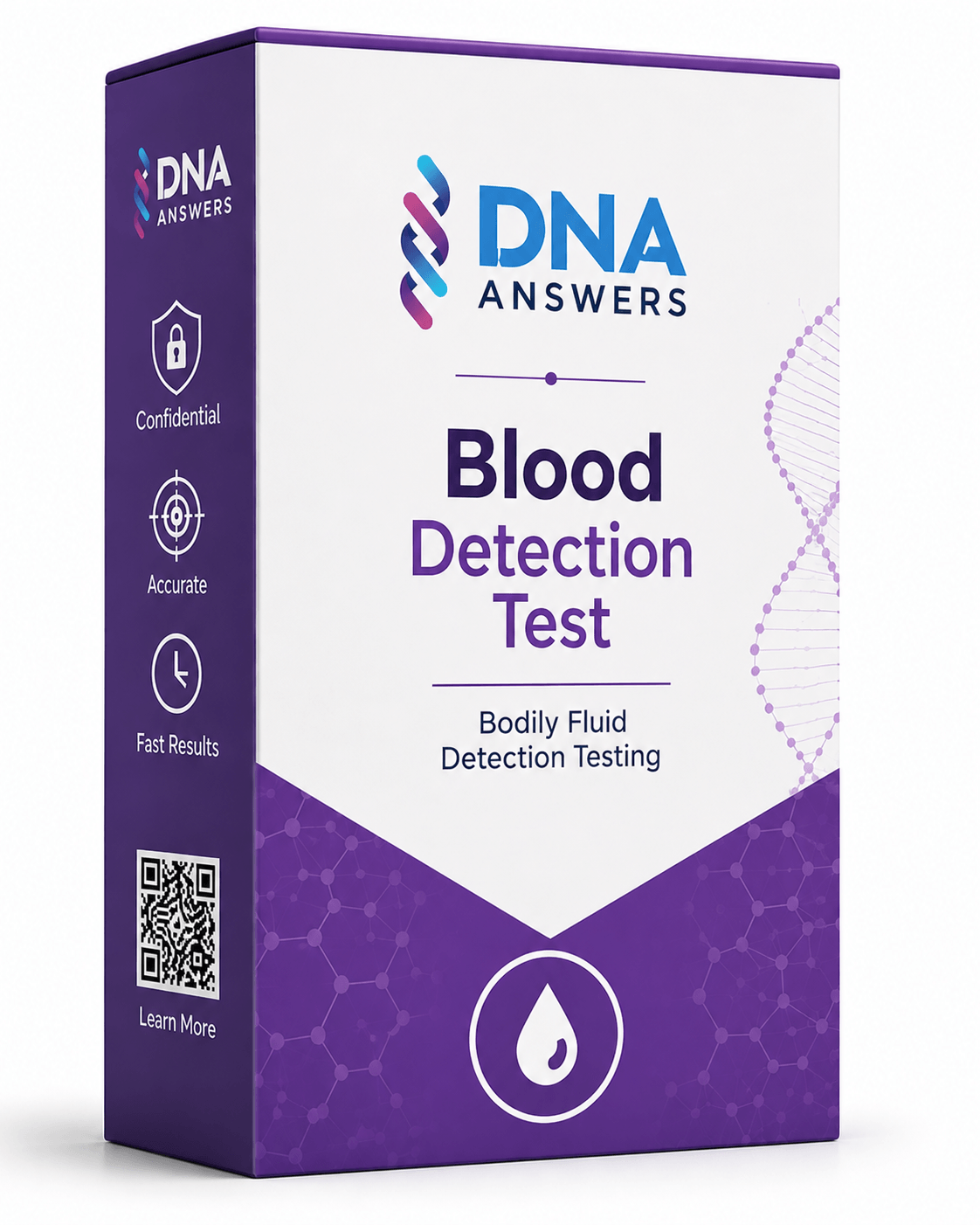

Before You Order
This is a laboratory testing service that compares a recovered DNA profile to a known reference sample.
A DNA profile can only be compared if sufficient human DNA is successfully recovered from the submitted item.
One complimentary oral swab collection kit for your reference sample is included with every standard order. Collection options can be customized during checkout.
For added discretion or faster processing, you may select "Electronic Instructions" during checkout and submit your own approved reference sample directly to our laboratory.